Indonesia enjoys a global reputation for genuine warmth, and visitors walking through Jakarta are routinely greeted by locals eager to practice English or exchange polite smiles. Violent street crime targeting foreign visitors is remarkably rare across the capital. However, like any metropolitan economic engine of ten million people, opportunistic hustles and tourist markups do occur, particularly in transit hubs and crowded historic quarters.
Most travel scams in Jakarta do not involve threats or intimidation. Instead, they rely on confusion over local currency denominations, unfamiliarity with taxi meters, or jet lag after long international flights. Knowing how these traps operate makes them easy to dodge, ensuring your travel funds go toward memorable cultural experiences rather than unnecessary surcharges.
1. The Rogue Airport Driver and Freelance Touts
The most frequent hustle happens within minutes of stepping past customs at Soekarno-Hatta International Airport (CGK).
How It Works
As you exit the arrivals gate, individuals wearing formal lanyards or standard jackets will approach, asking "Where you go?", "Need taxi?", or claiming that official app pickup bays are closed due to strikes or construction. They lead travelers toward unmarked private cars and demand inflated flat rates of 500,000 IDR to 800,000 IDR (roughly 32 to 50 USD) for trips to Central Jakarta, a ride that typically costs 180,000 to 260,000 IDR on a standard meter including highway tolls.
How to Avoid It
- Walk past anyone soliciting rides inside the terminal concourse without engaging.
- Follow overhead signage directly to the official ground transport exits.
- Queue strictly at designated Bluebird Group or Silver Bird taxi stands where staff issue a printed slip, or use the official Grab and Gojek airport lounge lounges where pickups are managed through the mobile app.
2. Unofficial Guides in Kota Tua and Fatahillah Square
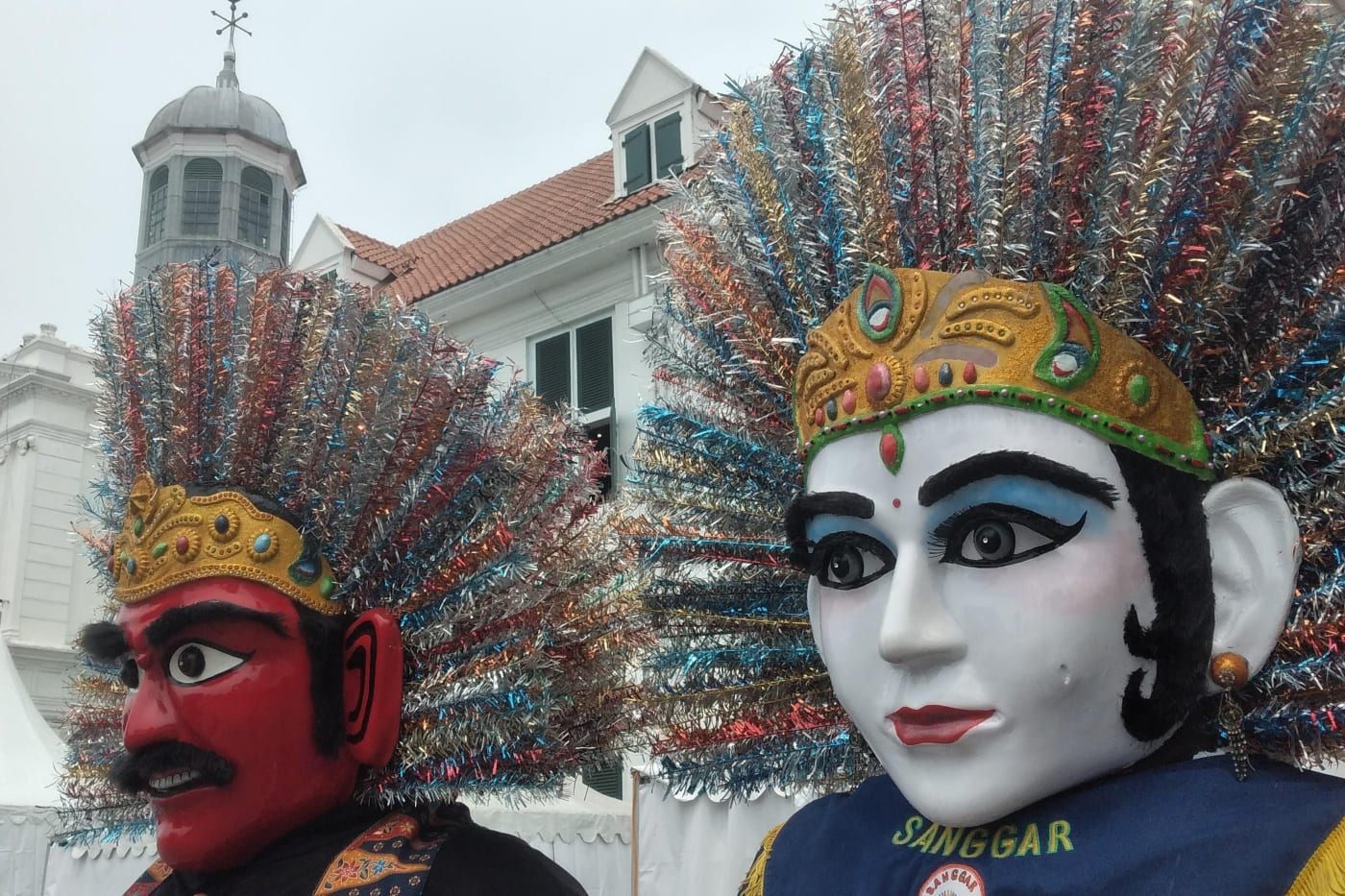
Jakarta Old Town (Kota Tua) is a picturesque gathering spot filled with colonial Dutch buildings, street performers, and museums. It is also where freelance guide hustles cluster.
How It Works
While you admire the facade of the Jakarta History Museum or photograph Cafe Batavia, a seemingly friendly stranger will start chatting, sharing unsolicited historical trivia. They will guide you across the square, show you toward a puppet maker workshop, and subsequently demand an exorbitant "professional guide fee" of 200,000 to 300,000 IDR for 20 minutes of casual conversation.
How to Avoid It
- If a stranger begins offering guided commentary without an invitation, politely decline immediately with a firm "No, thank you" (Terima kasih).
- Authentic museum staff wear formal department badges and have fixed admission ticket booths inside the museum foyer.
- If you want in-depth historical storytelling, review our checklist on how to choose a licensed Jakarta tour guide to recognize certified credentials before booking excursions.
3. The Broken Meter and Taxi Scenic Detours
While public transit has expanded significantly, street hailing taxis remains common.
How It Works
Drivers operating knock-off blue vehicles resembling official Bluebird cars may claim their meter is broken due to electrical faults, or they take needlessly circuitous routes through gridlocked side alleys to artificially inflate the distance.
How to Avoid It
- Never ride in a street-hailed cab if the driver refuses to activate the digital meter (argo). If they insist on a negotiated flat fee, step out immediately.
- Inspect the vehicle exterior carefully: genuine Bluebird taxis feature an illuminated rooftop sign displaying a bird silhouette, a company name sticker on the windshield header, and an official driver ID card clearly slotted onto the dashboard.
- For greater price transparency, weigh your transit alternatives in our detailed comparison of taxis versus Grab versus private drivers in Jakarta.
4. The Bajaj (Tuk-Tuk) Price Switch
Jakarta's bright blue three-wheeled natural-gas vehicles, known as bajaj, offer an iconic way to navigate short distances through narrow neighborhood streets.
How It Works
Because bajaj do not use digital meters, fares must be negotiated before boarding. A driver might verbally quote "fifty," intending 50,000 IDR, but upon arrival at your destination, they insist they meant 150,000 IDR, causing a tense public disagreement.
How to Avoid It
- Agree on the exact price before sitting down, showing the banknote physically or confirming the amount by typing it into your smartphone screen (e.g., "50,000 IDR, right?").
- As a general baseline, short hops of 1 to 2 kilometers within central neighborhoods should rarely exceed 25,000 to 40,000 IDR.
5. Currency Confusion and Missing Zeroes
The Indonesian Rupiah (IDR) trades in large denominations, with 100 USD converting to approximately 1.5 to 1.6 million IDR. Handling banknotes featuring multiple zeroes creates quick opportunities for accidental shortchanging.
How It Works
The blue 50,000 IDR note and the cyan-tinted 2,000 IDR note share similar color palettes under dim night market lighting. Disreputable street vendors or unvetted drivers may quickly slide a large banknote out of sight, claiming you handed them a smaller denomination, or shortchange you by omitting a zero on return change.
How to Avoid It
- Organize your wallet by separating bills of 100,000 IDR and 50,000 IDR from smaller change (10,000, 5,000, and 2,000 IDR).
- State the bill value aloud when handing over cash to cashiers or street food sellers (e.g., "Here is one hundred thousand").
- Whenever possible, utilize contactless digital payments through international debit cards at established shops, or carry exact small bills for street snacks.
6. ATM Skimming in Quiet Locations
ATM skimming devices remain an occasional issue across Southeast Asian urban centers.
How to Avoid It
- Avoid freestanding, poorly lit street ATMs located in isolated alleyways.
- Withdraw cash exclusively from official bank branch ATMs (such as BCA, Mandiri, BNI, or Bank CIMB Niaga) located inside guarded banking halls or large shopping centers with active security personnel.
- Cover your PIN entry hand completely with your other hand.
How to Guarantee a Friction-Free Trip
Staying safe from travel hassles does not require viewing every local interaction with suspicion. Jakarta is overwhelmingly welcoming, and basic street sense prevents virtually all common inconveniences. Familiarize yourself with overall city protocols in our assessment of whether Jakarta is safe for tourists.
If you prefer skipping navigation ambiguity altogether, booking a dedicated private car rental with driver in Jakarta or choosing a curated historical private city tour of Old Batavia ensures fixed, transparent pricing, verified local guides, and zero transit bargaining.
For a comprehensive review of city districts, airport logistics, and daily budgeting, consult our foundational Jakarta travel guide for first-timers.